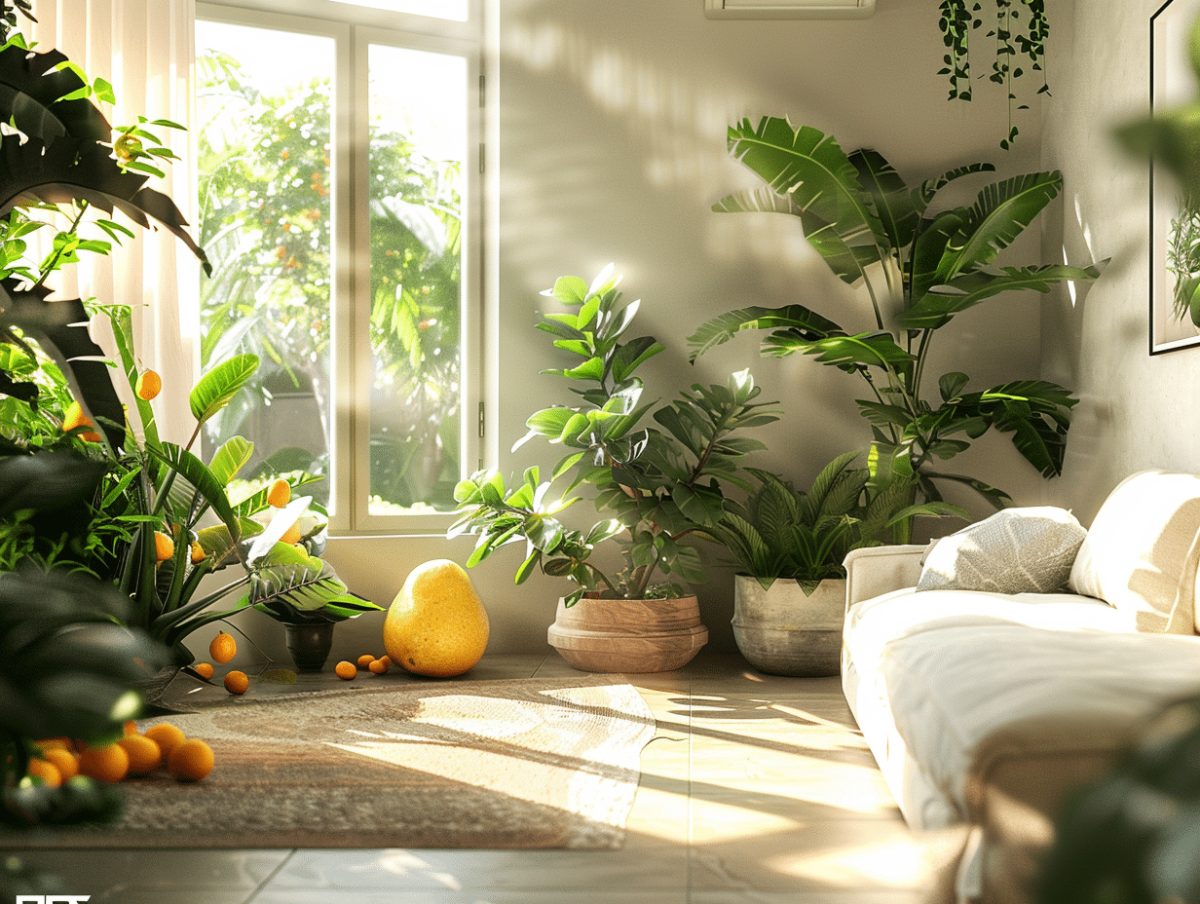
Growing a garden in an apartment may seem challenging, but the idea of growing exotic fruit trees opens up exciting new possibilities. With a little creativity and the right advice, it is entirely possible to transform a small space into a tropical oasis.
Exotic fruit trees, such as the lemon tree, mandarin tree, or banana tree, often adapt well to indoor growing conditions. By choosing dwarf varieties and using appropriate pots, you can harvest delicious fruits while adding a touch of greenery and exoticism to your interior.
The benefits of growing exotic fruit trees in an apartment
Growing exotic fruit trees in an apartment offers several notable advantages. These trees bring an undeniable aesthetic touch to your interior with their lush foliage and colorful fruits. Simply having a potted mango tree or a lemon tree can transform a living space into a true oasis.
Exotic fruit trees are often rich in vitamins and antioxidants, contributing to a healthier diet. For example, the Japanese goumi, with its small oval red fruits, is a valuable source of vitamins and antioxidants. Indoor cultivation allows you to benefit from these advantages without the constraints of outdoor growing.
Easy maintenance
- Exposure: place your trees near well-exposed windows to ensure sufficient sunlight.
- Watering: ensure regular watering, but avoid excess to prevent waterlogged roots.
- Fertilizer: use specific fertilizers for fruit plants to promote growth and fruiting.
By combining aesthetics, nutritional benefits, and simplified maintenance, exotic fruit trees in an apartment provide an excellent solution for those wishing to blend decoration and healthy eating. The potted mango tree, for example, becomes not only a decorative element but also a source of delicious fruits.
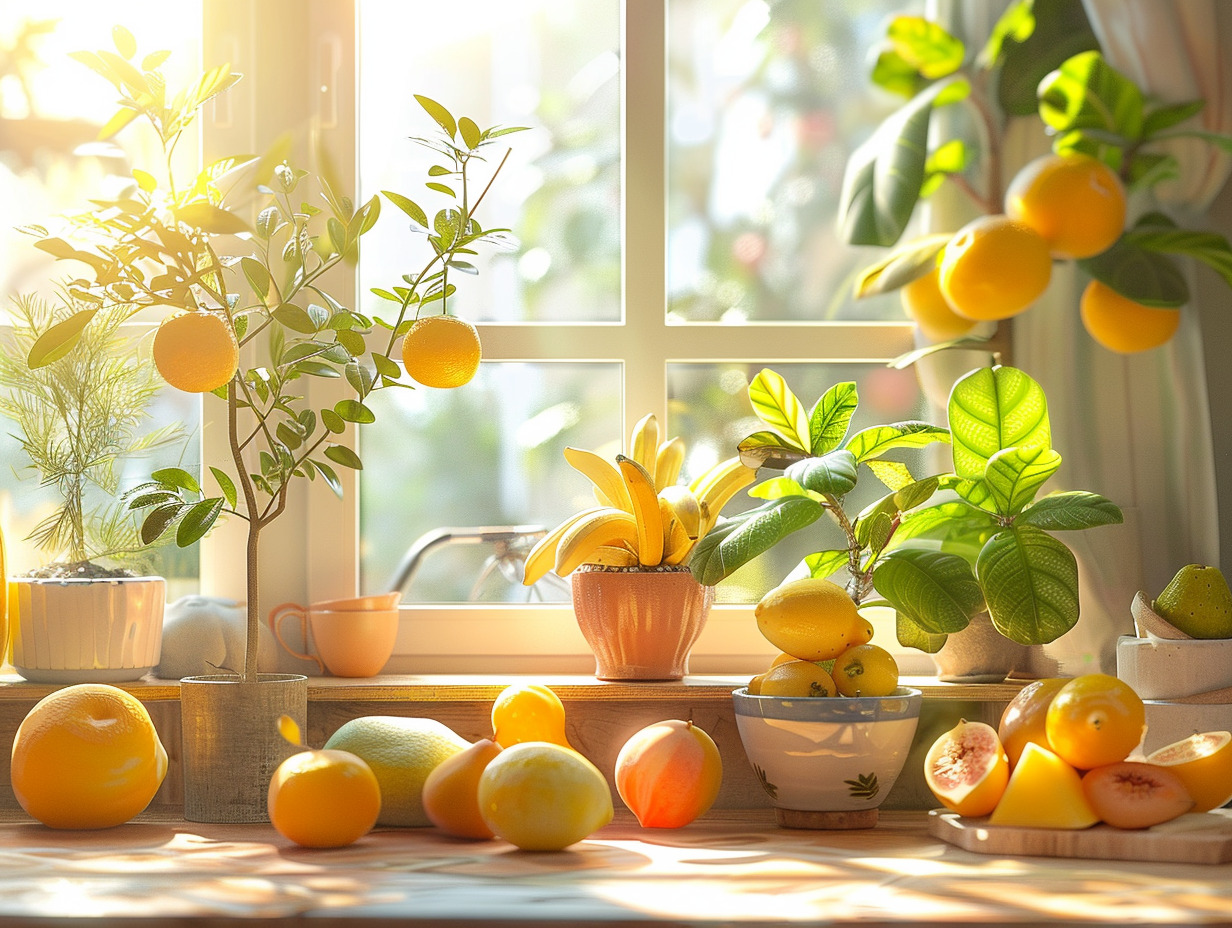
How to choose and care for your exotic fruit trees
To choose the right exotic fruit trees for your apartment, several criteria must be considered. The first is size: some trees, like the pecan tree, can reach heights of 40 meters, making them unsuitable for a small indoor space. Opt for compact varieties like the Japanese goumi or the Korean mulberry that do not exceed 4 meters in height.
Consider the climatic conditions of your interior. The Brazilian guava is a robust option, capable of withstanding temperatures down to -15 °C. In contrast, some species, like the pawpaw, require specific conditions to thrive. The hardiness factor is therefore essential to ensure the survival and fruiting of your trees.
Choose species suited to the available light in your apartment. A finger lime will require maximum light exposure to produce its characteristic fruits, while others may tolerate slightly shaded areas.
Caring for exotic fruit trees
- Watering: water regularly, but avoid excess water to prevent root rot.
- Fertilizer: apply specific fertilizers for fruit plants to promote healthy growth and good fruit production.
- Pruning: prune regularly to control the size of the tree and stimulate fruiting.
By following these recommendations, you can transform your apartment into a true tropical paradise while enjoying the exotic flavors and nutritional benefits of these rare fruits.