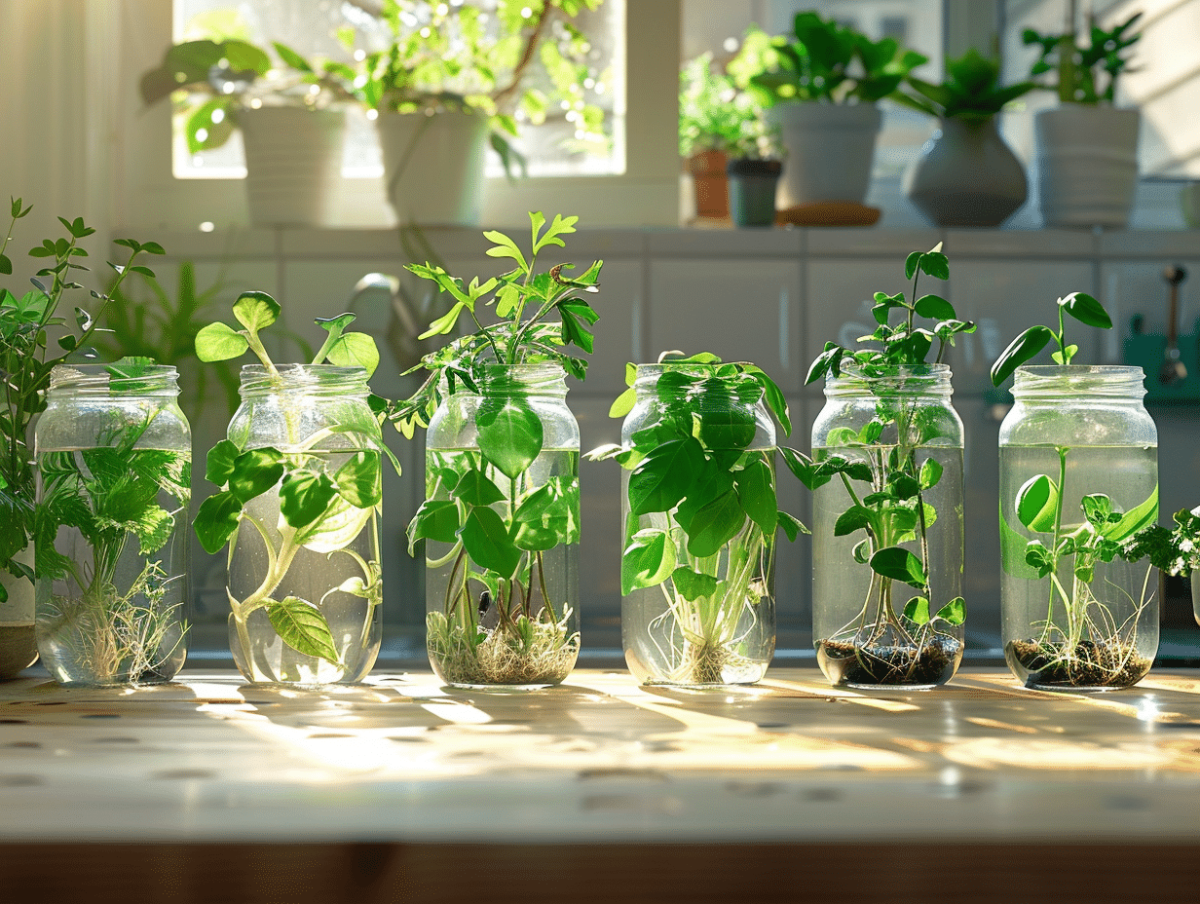
Multiplying aquatic plants through cuttings is a fascinating and economical technique for enthusiastic aquarists. This method allows for the propagation of favorite species and helps maintain a balanced ecosystem in the aquarium. To achieve significant results, a meticulous approach is necessary. It involves the careful selection of mother plants, precise cutting of cuttings, choosing an appropriate substrate, and optimal light and temperature conditions. These key steps, if followed carefully, ensure vigorous growth and the longevity of aquatic flora in a home environment.
Preparation and selection of aquatic plants for cuttings
The success of cuttings begins with the choice of plants. Distinct are the species that easily accommodate this practice. Among them, mint, oleander, and fuchsia prove to be ideal candidates for novices eager to familiarize themselves with the art of aquatic cuttings. These plants, thanks to their adaptability, promise quick and vigorous rooting in water.
In contrast to these specimens, some plants require more care and attention when reproducing through aquatic cuttings. Aucuba, oleander, Graham’s sage, cinquefoil, willow, and hydrangea are among the plants that are more difficult to propagate in water. Their handling requires a greater understanding of the specific conditions needed for their development.
The preparation of the cutting is a fundamental step. It is essential to make a clean and precise cut to promote healing and the growth of new roots. The use of disinfected and sharp tools is recommended to prevent any infection and maximize the chances of success.
Although propagating certain plants can be complex, do not hesitate to experiment with various species. Practice teaches that propagating honeysuckle in water, for example, can yield surprising results. The act of cutting becomes a true living laboratory, where patience and observation are the keys to a thriving aquatic garden.
Techniques and tips for successful aquatic cuttings
Aquatic cuttings are a multiplication technique suitable for many plants. To succeed, be sure to carefully select the section of the plant to be cut. The stem cutting, for example, should have at least two nodes to ensure optimal growth. When taking the cutting, be sure to cut just below a node, where the concentration of growth hormones is higher.
Once the cutting is ready, some gardeners use rooting hormones to promote rooting. Although this practice is not a requirement, it can significantly increase the chances of the cutting taking root. In an aquatic environment, the use of charcoal is also wise. It helps to prevent root rot and purify the water.
For specific plants, such as papyrus, the cutting method differs slightly. Papyrus is propagated by placing the stem upside down in water, a detail not to be overlooked to ensure the success of the operation. This uniqueness demonstrates that each species may have specific needs regarding aquatic cuttings.
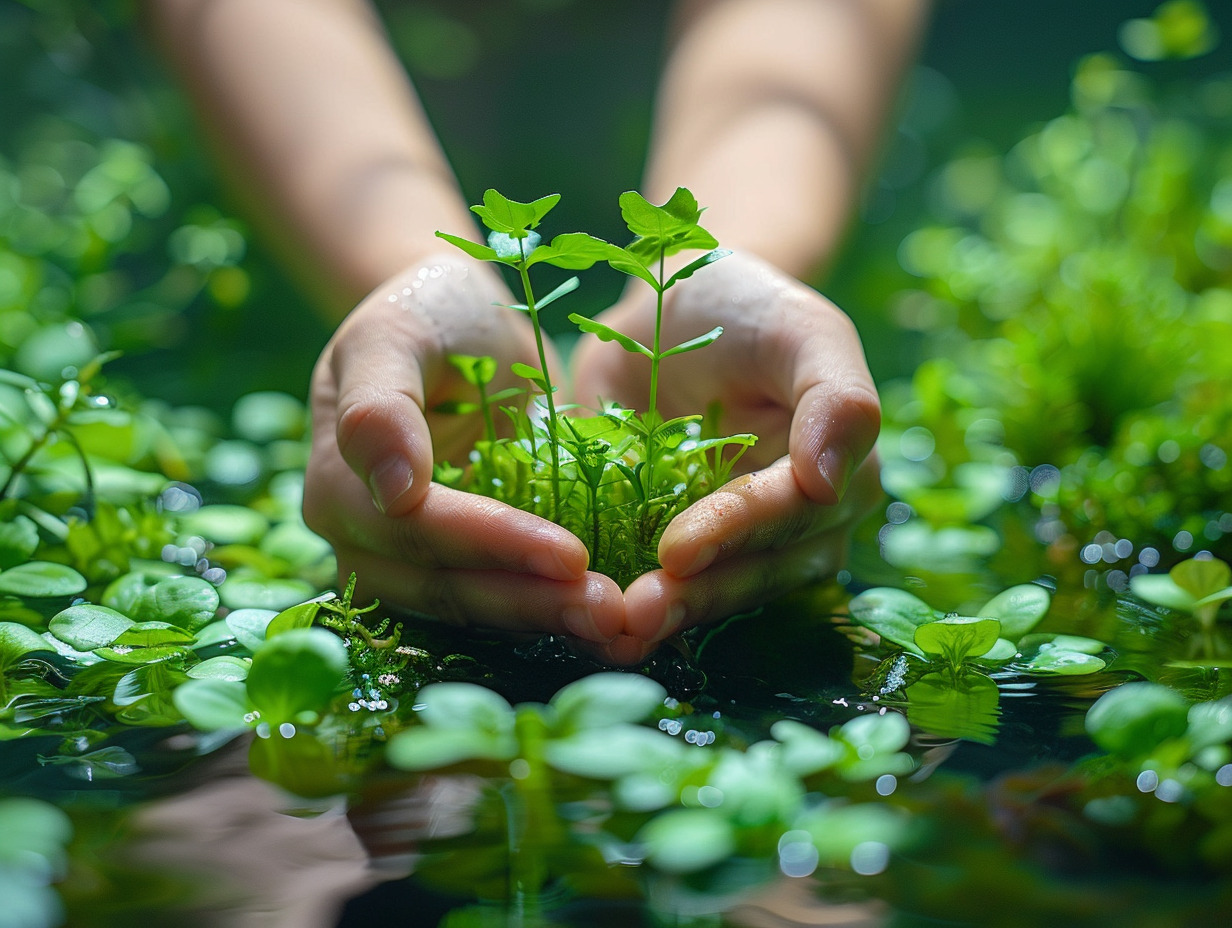
After the first roots appear, the cutting should be transferred to a more suitable environment for its growth. It is then time to choose a potting soil for transplanting, which will provide the necessary nutrients for the development of the young plant. This transition should be done carefully to avoid damaging the newly formed roots.