
After each cup of coffee, the filter often ends up in the trash without a second thought. However, coffee grounds contain nitrogen, phosphorus, and potassium, three nutrients that plants absorb for their growth. The key is knowing how to dose it and where to place it to gain real benefits without harming your crops.
The pH of coffee grounds: a persistent misunderstanding in the garden
Have you read that coffee grounds acidify the soil and should be reserved for acid-loving plants like hydrangeas or azaleas? This claim is widespread, but it is based on a confusion between liquid coffee and already brewed grounds.
Liquid coffee has an acidic pH, around 5. Infused grounds, on the other hand, have a pH close to neutrality, between 6.5 and 6.8. The hot water extraction carries away most of the organic acids into your cup. What remains in the filter is much more neutral than one might think.
In practice, spreading grounds at the base of your roses or tomatoes will not turn a calcareous soil into acidic soil. To truly lower the pH of a substrate, you would need amounts of grounds far beyond what a household produces. If you want to use coffee grounds for plants, keep in mind that its main benefit lies elsewhere: soil structure and the gradual supply of nutrients.

Nitrogen hunger and impermeable crust: two concrete traps to avoid
Coffee grounds release nitrogen, phosphorus, and potassium as they decompose. But this decomposition comes at a cost that most articles fail to detail.
The phenomenon of nitrogen hunger in the soil
When microorganisms break down carbon-rich organic matter, they draw nitrogen from the soil to fuel their own metabolism. During this phase, the nitrogen in the soil becomes temporarily unavailable to plants. This is what agronomists call “nitrogen hunger.”
With coffee grounds, the risk is especially present if you lay down a thick layer on poor soil. Plants yellow, growth slows, and the lack of fertilizer is blamed when the problem actually stems from an excess of undecomposed material.
The crust of grounds on the surface
Grounds have a fine and compact texture. Spread in a continuous layer around a plant, they dry out and form a hydrophobic crust that prevents water from reaching the roots. Several gardeners have noticed their potted plants drying out after a few weeks, simply because the watering water ran off this hardened film instead of penetrating the substrate.
The solution is simple: never leave the grounds on the surface without mixing them in. A light hoeing is enough to incorporate them into the top few centimeters of soil and avoid this crusting effect.
Coffee grounds and sowing: a mix to avoid for young plants
Are you starting your tomato or basil seeds in the spring? Coffee grounds are not their ally at this stage. The residual caffeine present in the grounds can inhibit seed germination and slow the development of young seedlings.
Caffeine acts as a growth inhibitor on seedlings, a mechanism that the coffee plant uses in nature to limit competition around it. Adding grounds to a seedling mix introduces a chemical brake at the precise moment when the seed needs all its energy to germinate.
Reserve the grounds for established plants, with a sufficiently developed root system to tolerate the residual caffeine and benefit from the nutrients released over time.
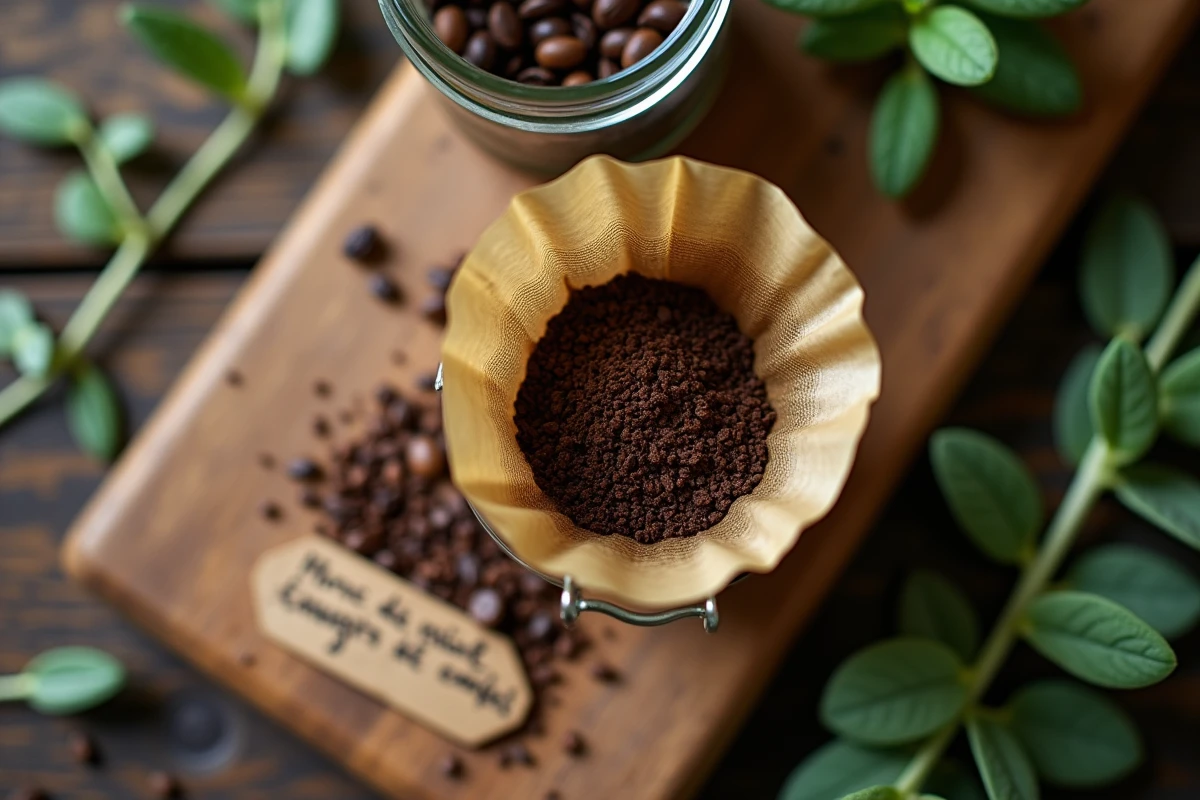
Dosage and application methods of coffee grounds in the garden
Coffee grounds are not a complete fertilizer. They complement existing fertilization without replacing it. Here are the methods that work effectively.
Direct incorporation into the soil
Spread a thin layer of grounds at the base of adult plants, then lightly hoe to integrate it into the soil. A few handfuls per plant are sufficient, no more than once a month. This frequency allows time for microorganisms to decompose the material without causing nitrogen hunger.
Addition to compost
This is probably the most effective use. Mixed with other organic waste in a composter, coffee grounds accelerate microbial activity due to their nitrogen content. Unbleached paper filters can be added without issue.
Homemade liquid fertilizer
Dilute a few tablespoons of grounds in a liter of water and let steep overnight. Strain, then use this water to water your indoor or balcony plants. The supply remains light, which is suitable for potted plants whose substrate saturates quickly.
- Tomatoes, zucchinis, raspberries: tolerate grounds well in the ground, provided they are incorporated into the soil and not overused
- Hydrangeas, rhododendrons, blueberries: benefit from the slight nutrient supply, even if the acidifying effect is negligible
- Indoor potted plants: prefer diluted liquid fertilizer to raw grounds to avoid soil compaction
- Sowing, cuttings, young plants: to be excluded until the plant is well established
Natural fertilizer with coffee grounds: what you can realistically expect
Coffee grounds improve soil structure by adding organic matter. They nourish microbial life, promote drainage in heavy soils, and contribute to water retention in sandy soils. On these points, their usefulness is real.
However, the quantities of nutrients they release remain too low to replace an organic or mineral fertilizer suited to the needs of your crops. Considering them as a structural amendment rather than a fertilizer avoids many disappointments.
Coffee grounds deserve their place in a gardener’s routine, provided three principles are respected: always incorporate them into the soil rather than leaving them on the surface, dose them sparingly, and exclude them from seed trays. Used with these precautions, they usefully complement a compost or fertilization program at no cost.