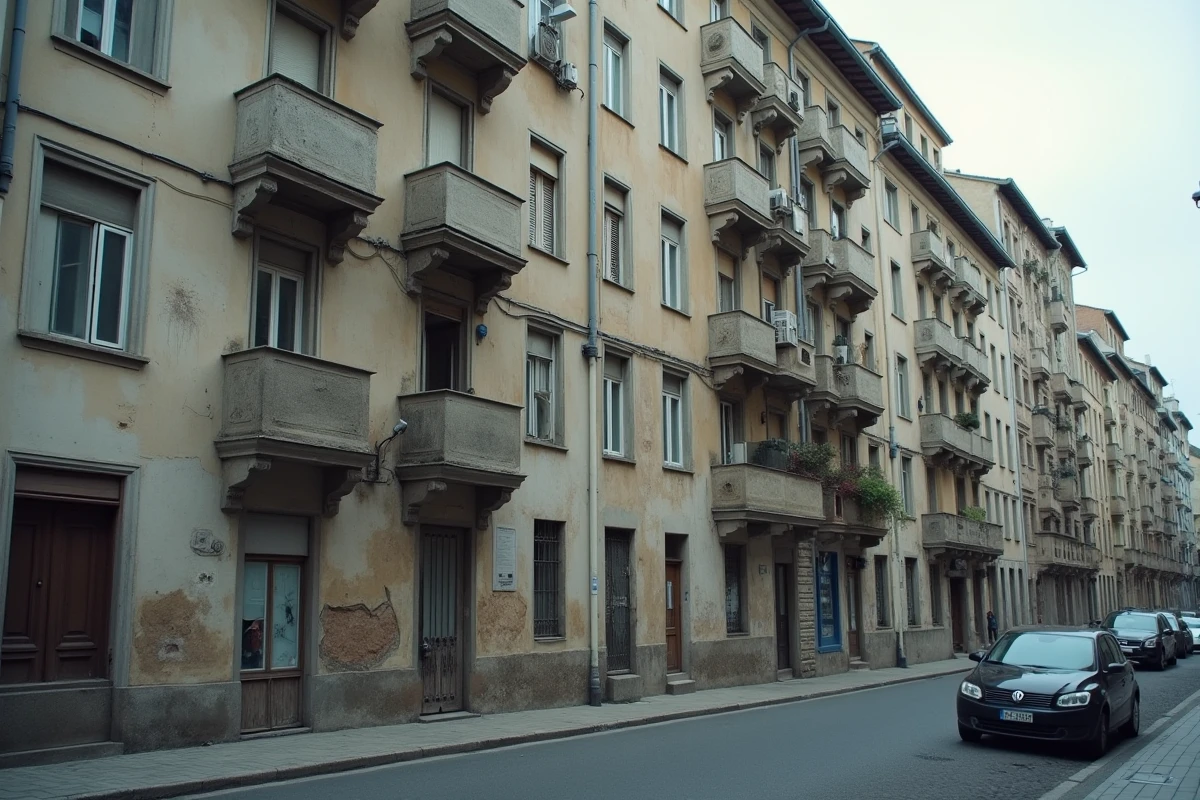
In France, burglaries in apartments are not evenly distributed across the different levels of a building. The ground floor accounts for the majority of intrusions, but the immediately upper floors are not spared. An analysis of the available data reveals that a home’s vulnerability depends less on its absolute height than on its actual accessibility.
Physical accessibility: the factor that statistics measure poorly
Most analyses of apartment burglaries categorize homes by floor, from the ground floor to the top level. This classification seems logical, but it obscures the variable that weighs most heavily in a burglar’s choice: the physical accessibility of the home from the outside.
An apartment on the third floor with a balcony connected to a sturdy downspout or an adjacent parking structure presents a risk comparable to that of a ground floor apartment facing the street. Prevention reports, particularly those from the Vaud cantonal police, emphasize the role of balconies, roofs, and climbing elements in burglaries of supposedly protected upper floors.
The statistics on apartment burglaries would benefit from incorporating this architectural dimension. A Haussmannian building with continuous balconies on the first floor and a modern building with a smooth facade do not present the same risk profile, even at the same level.
The German Federal Criminal Police Office, in its prevention recommendations for collective housing, also classifies entry points by type of access (door, window, balcony, roof) rather than by floor. This approach seems more relevant for guiding security measures.

Ground floor and first floor: two levels of vulnerability to distinguish
The ground floor remains the most burglarized level in collective housing. Direct access from the street or a private garden, the frequent presence of windows at eye level, and the possibility of a quick escape make it a prime target. This observation is shared by all available sources.
The first floor concentrates a risk underestimated by residents. The National Gendarmerie, in a regional summary concerning Île-de-France, notes that apartments located just above the ground floor are increasingly targeted. They combine two characteristics: still easy accessibility (awnings, low walls, garbage areas serving as footholds) and a false sense of security among residents.
This false impression of protection has direct consequences. First-floor occupants are more likely to leave their windows open or ajar, less systematically close their shutters, and invest less in security devices than those on the ground floor.
The case of the second floor
The second floor appears in some observations as a transitional level. The risk decreases compared to the lower levels, but it does not disappear. In buildings with accessible balconies or facades offering handholds, the second floor remains a realistic target for an experienced burglar.
Beyond the third floor, the number of intrusions by climbing drops significantly. The available data do not allow for a precise threshold to be set, as the architectural configuration varies too much from one building to another.
Access mode to the building: the variable that redistributes risk among floors
One point that floor rankings often overlook: securing the main access to the building radically changes the situation. When the entrance door is equipped with a code lock, video intercom, or badge access control, the ground floor loses part of its specific vulnerability.
On the other hand, an underground parking lot with direct access to the floors opens a discreet entryway that affects all serviced levels. MAIF, in its recommendations on prevention in collective housing, highlights this point as a major risk factor. AXA France, in its housing barometer, confirms that the access mode to the building weighs as much as the floor in assessing risk.
The following elements directly influence the vulnerability of an apartment, regardless of its floor:
- The presence or absence of a secure entryway to the building, with a code lock or resident badge
- The existence of an underground parking lot communicating with the common areas without intermediate control
- The configuration of balconies and terraces, their continuity from one apartment to another, and the sturdiness of separations
- The lighting of the surroundings and common areas, which alters the behavior of intruders during the reconnaissance phase
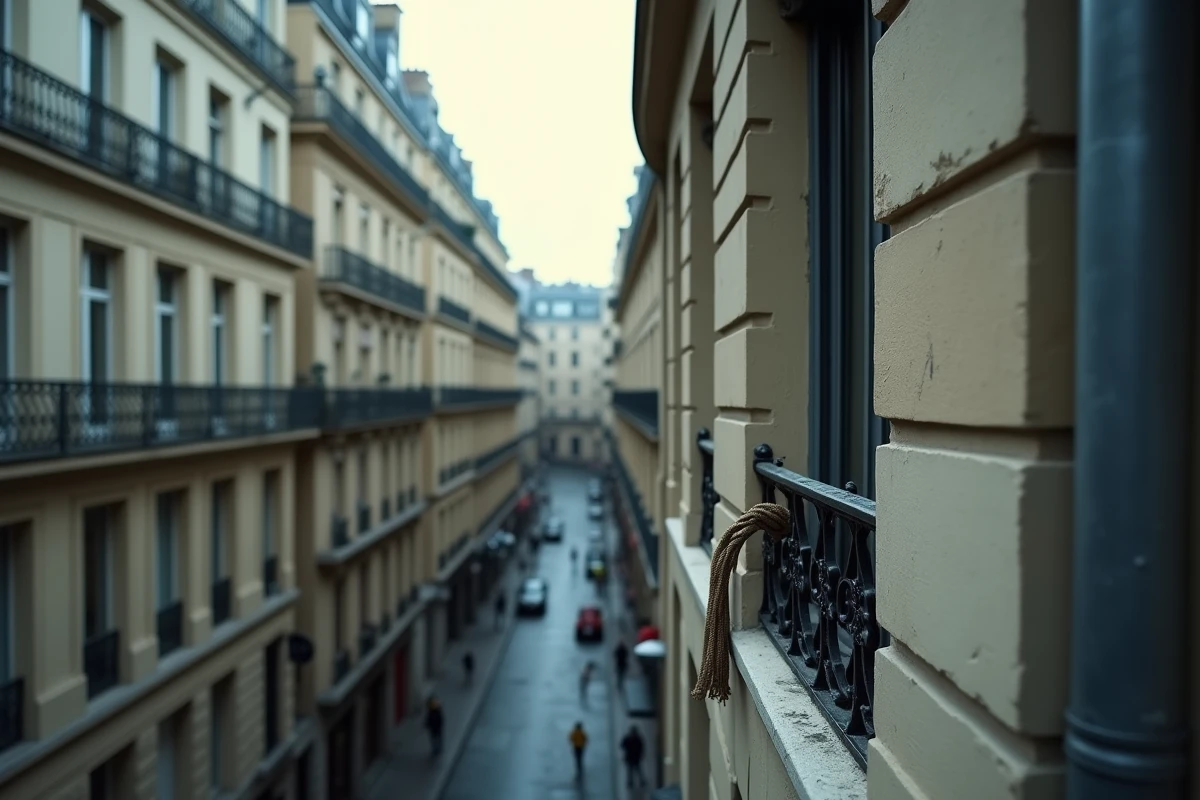
Apartment burglary in summer: when heat alters vulnerability by floor
Periods of intense heat introduce a seasonal factor rarely taken into account. During heatwaves, residents of intermediate floors leave their windows open more often at night, creating opportunities that the rest of the year does not offer.
The PACA Regional Crime Observatory noted this trend in a report dedicated to summer burglaries in collective housing. Floors that normally present a moderate risk see their exposure significantly increase during the summer.
This phenomenon particularly affects buildings without air conditioning, where residents have no choice but to ventilate constantly. Cross-ventilated apartments, with openings on two facades, are the most affected.
Older people on higher floors: a specific risk profile
High-floor housing occupied by elderly or mobility-impaired individuals presents a particular profile. These residents go out less, which might seem deterrent. In practice, their social isolation and predictable habits facilitate detection by burglars who access the building through common areas.
In this case, the intrusion does not occur through the facade but through the apartment’s front door, often less secure than in ground floor homes where occupants are aware of the risk.
The distribution of burglary risk in apartments is therefore not limited to a ranking of floors. The ground floor and first floor remain the most exposed in the majority of configurations.
An apartment located on the fifth floor, served by an open underground parking lot and occupied by an isolated person, can present a risk of break-in comparable to that of a ground floor home. Reasoning solely in terms of floor gives a false impression of security that the analysis of operational methods does not confirm.