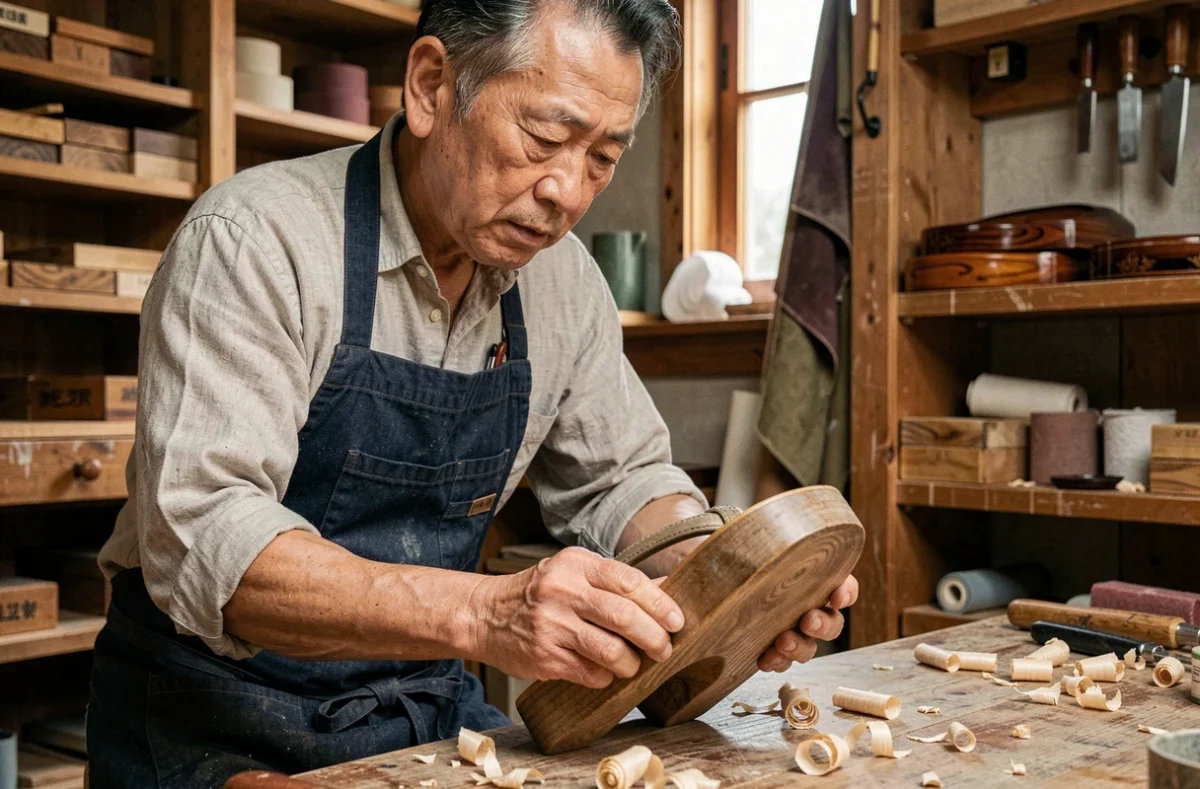
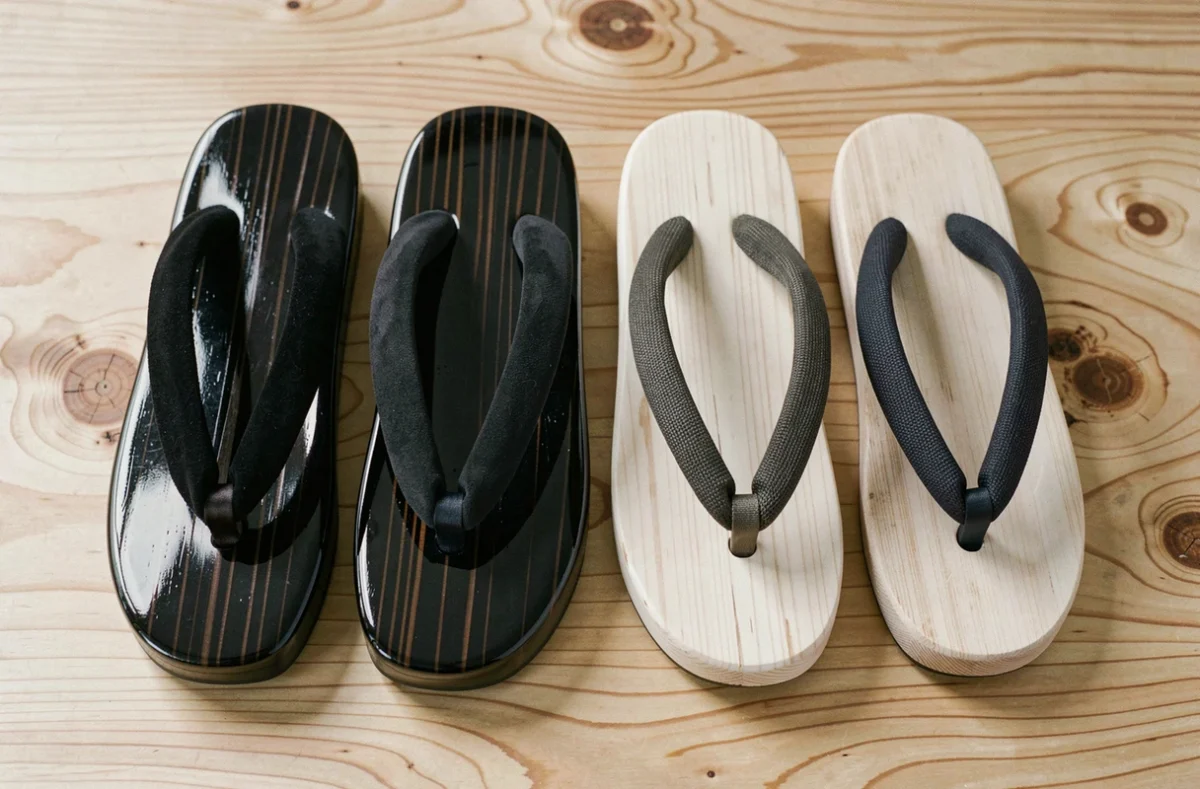
Between two pairs of geta sandals sold online, one handmade and the other industrial, the differences are not immediately obvious in a photo. The wood, the strap, and the overall shape look similar. To distinguish an authentic Japanese manufacture from a copy, one must examine specific structural criteria that can be verified upon receipt of the product. This article compares point by point the markers that separate a handmade geta from an industrial model.
Repairability and after-sales service: a criterion often ignored in product listings
Most buying guides focus on the wood or the strap. A more discriminating indicator often goes unnoticed: the possibility of repairing each component separately.
Contemporary Japanese manufacturers offer the replacement of the rubber on the teeth, the sole, or the hanao after wear. This approach assumes that each piece is detachable, which is only possible with a handmade assembly designed to last. An industrial geta glued or molded in one piece does not allow for any such intervention.
If the seller does not mention spare parts or repair service, the likelihood of a disposable product increases. To learn more about Kabanes, the traceability of the workshop and the availability of follow-up after purchase are concrete indicators.
Comparative table: Japanese handmade geta vs. industrial model
| Criterion | Handmade geta | Industrial geta |
|---|---|---|
| Teeth (height) | Carved from the same block of wood as the dai | Glued, screwed, or attached with dowels |
| Wood | Kiri (paulownia): fine grain, cream-white hue, notable lightness | Unidentified wood, often heavy and artificially dyed |
| Hanao (strap) | Hand-sewn, traditional fabric (woven cotton, silk) | Glued or stapled, synthetic fabric |
| Dai surface | Visible traces of manual tools (slight irregularities) | Perfectly smooth surface, uniform mechanical finish |
| Repairability | Hanao, sole, and rubber teeth are replaceable | No replaceable parts |
| Adaptation to use | Tatami/yukata models or urban models with rubber sole | Single model, unspecified use |
This table summarizes the observable differences. Each criterion deserves detailed examination, but the test of the monoblock dai remains the quickest to perform: simply turn the sandal over.
Kiri and monoblock dai: what the wood reveals about the manufacturing
Paulownia (kiri) is the reference wood for Japanese handmade geta. Its remarkable lightness and natural resistance to moisture make it a suitable material for prolonged wear, even in humid conditions.
A kiri dai can be recognized by three visual indicators:
- A fine and regular grain, with a natural hue leaning towards cream white, without artificial dye
- A noticeably lighter weight than a generic wood model, perceptible upon handling
- Subtle traces of manual tools on the surface, indicating individual shaping rather than mass production
The teeth carved from the mass of the dai are the most reliable structural marker. On a handmade product, the block of wood is sculpted to form both the platform and the two perpendicular teeth. No joint, no glue, no screws separate these elements.
In contrast, an industrial geta often features attached teeth. The junction point between the tooth and the dai reveals the assembly: a slight color mismatch, a visible glue line, or a dowel made of different wood.
Hand-sewn hanao: the strap as a second test
The hanao, this V-shaped strap that goes between the big toe and the other toes, provides a second level of verification. On a handmade geta, the hanao is hand-sewn with woven cotton or silk fabric. The stitches are visible but regular, and the fabric has a palpable texture.
On an industrial model, the hanao is glued or stapled to the base of the dai. The fabric is generally synthetic, smooth, and uniform. The attachment does not allow for the replacement of the strap in case of wear.
Traditional geta or urban geta: two distinct handmade objects
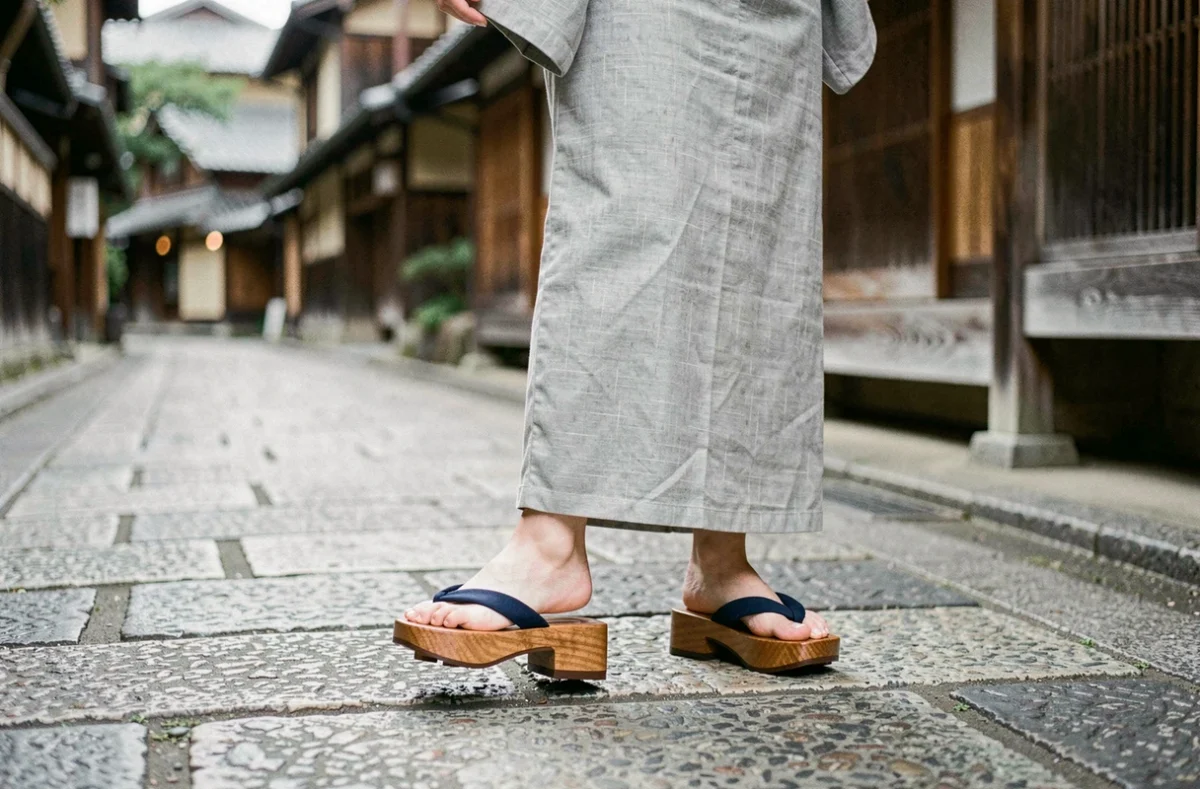
To associate authenticity with a fixed form would be a mistake. Japanese workshops today produce handmade geta designed for walking on asphalt, with high-resistance rubber protections on the teeth.
The manufacturer Shizuoka Mizutori, for example, combines the tradition of Suruga-nuri geta with contemporary research on ergonomics and foot support. A contemporary handmade model is no less authentic than a traditional model: the criterion remains the manufacturing method, not the form.
This distinction has practical consequences:
- A traditional geta, with bare wooden teeth, is suitable for wearing with a yukata or kimono on tatami or indoor floors
- An urban handmade geta incorporates a rubber sole or coating for daily use on sidewalks
- In both cases, the monoblock dai in kiri and the hand-sewn hanao remain markers of Japanese handmade manufacturing
Perceived comfort can therefore result from modern ergonomic design as much as from ancient craftsmanship. The intended use determines the type of geta, not the level of artisanal quality.
Product listing and traceability: the information to demand
A reliable product listing for Japanese handmade geta sandals should mention the name or location of the manufacturing workshop, the type of wood used, and the method of assembling the dai and the ha. The absence of this information almost always indicates an industrial product.
The mention “made in Japan” alone guarantees nothing: it can apply to a final assembly carried out in Japan from imported components. The traceability of the workshop, the availability of spare parts, and the possibility of directly contacting the manufacturer provide stronger indicators than an origin label.
The online geta market mixes carefully crafted copies and handmade productions without clear distinction. The structural criteria described here, from the monoblock dai to the hand-sewn hanao, allow for sorting without relying on commercial discourse. Ultimately, the seller’s ability to offer a repair service remains the most revealing test of the actual quality of the product.