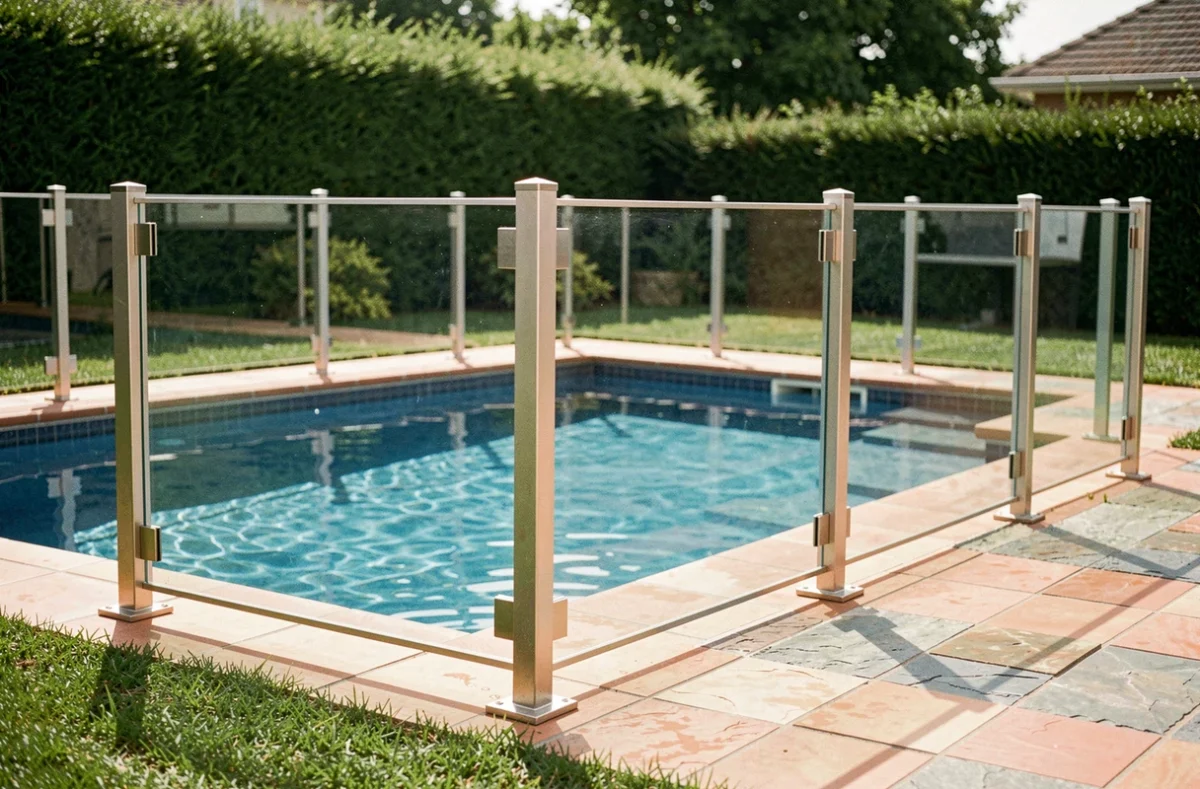
The NF P90-306 standard sets a minimum height of 1.10 meters for swimming pool safety barriers. This requirement, which applies to any in-ground or semi-in-ground pool installed at a private residence, is not just a simple number: the method of measurement, the characteristics of the gate, and the mechanical resistance of the entire system determine the actual compliance of the device.
Measuring the height of the pool barrier: the support point trap
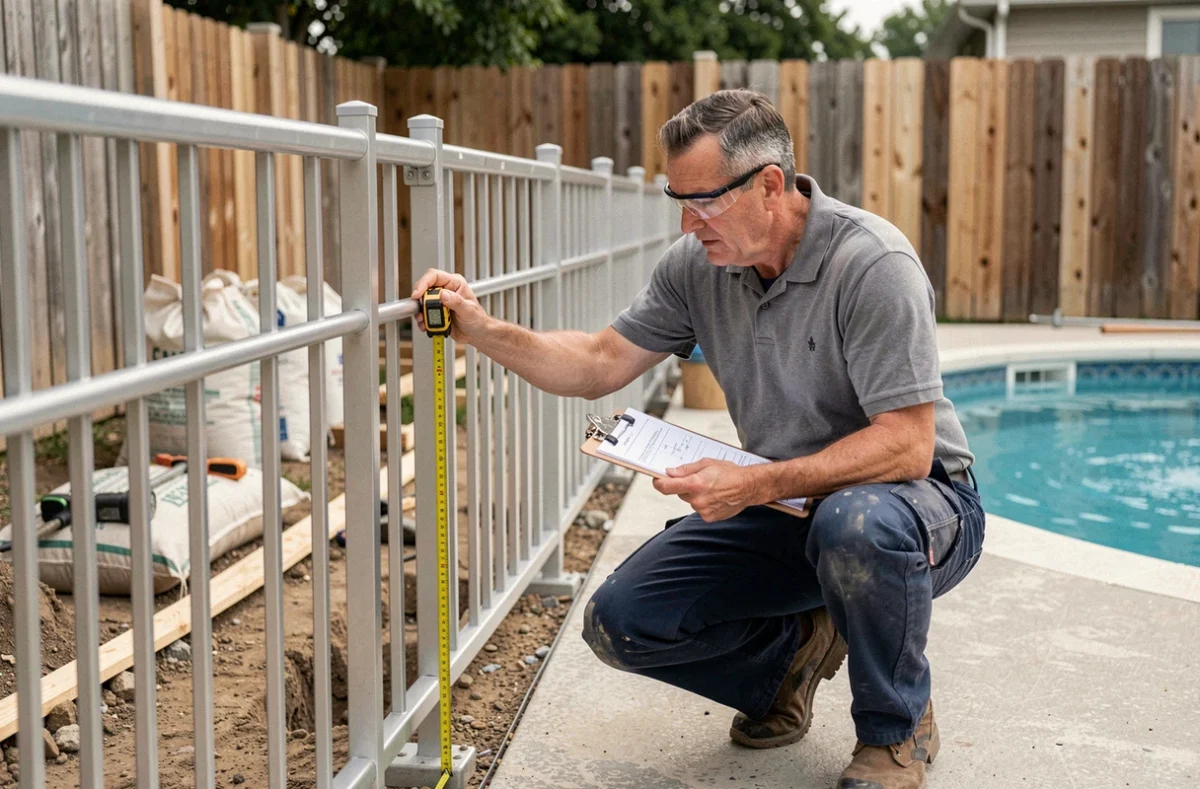
Most homeowners remember the threshold of 1.10 meters without questioning from which point this height is calculated. The NF P90-306 standard requires measuring from the nearest accessible support point, not necessarily from the natural ground at the base of the fence.
An elevated terrace, a landscaping wall, a staircase, or even a stone mass against the barrier mechanically lowers the useful height. If a child can use an element located thirty centimeters above the ground as a support, the effective height of the barrier falls below the regulatory threshold, even if it measured 1.10 meters from the natural ground.
To verify the compliance of an existing installation, it is therefore necessary to inspect the entire perimeter of the barrier and identify every object, fixed or movable, that could serve as a foothold. A flower pot, a storage box, or a toy left on the ground can be enough to compromise the protection.
Understanding the obligations and standards for pool barrier height requires reasoning in terms of actual residual height rather than raw height measured at manufacturing.
NF P90-306 standard: requirements beyond minimum height
Height is just one of the parameters regulated by the standard. Three other criteria determine whether a barrier truly protects against a young child accessing the pool.
- Spacing between vertical or horizontal elements: the bars, panels, or cables must be close enough together so that a child cannot pass through or slip their head through. Regularly spaced horizontal bars facilitate climbing and should therefore be avoided.
- Mechanical resistance: the barrier must withstand a push without permanently deforming. A flexible panel that moves under pressure does not fulfill its function, even if it reaches the correct height.
- Gate with appropriate closing and locking mechanisms: the gate must close automatically and lock at a height or by a mechanism inaccessible to a child under five years old. A simple latch at adult hand height is insufficient if a child can operate it by climbing.
All of these requirements aim for a single objective: to physically prevent a child from accessing the water surface without adult supervision.
Property fence and pool barrier: a common confusion
Many homeowners believe that the fence surrounding their property replaces the pool barrier. The regulations do not share this interpretation.
The safety device must separate the accessible area of the house from the pool itself. A peripheral fence located several meters from the pool does not prevent a child already in the garden from reaching the water. The compliant barrier defines a close perimeter around the pool, ensuring that access must go through the secured gate.
In the event of a check or an accident, it is the actual separation between the living area and the water surface that will be examined. A pool protected only by the property fence may be considered non-compliant, with the legal consequences that this implies.
Sanctions and owner liability in case of non-compliance
The law of January 3, 2003, codified in articles L.128-1 to L.128-3 of the Construction and Housing Code, mandates the installation of at least one standardized safety device for any in-ground or semi-in-ground pool. Failure to comply with this obligation exposes one to a fine of up to 45,000 euros.
Beyond the fine, the civil and criminal liability of the owner may be engaged in the event of drowning. The absence of a compliant device or a poorly maintained device (gate stuck in the open position, deformed barrier, insufficient height) constitutes a significant breach of a legal safety obligation.
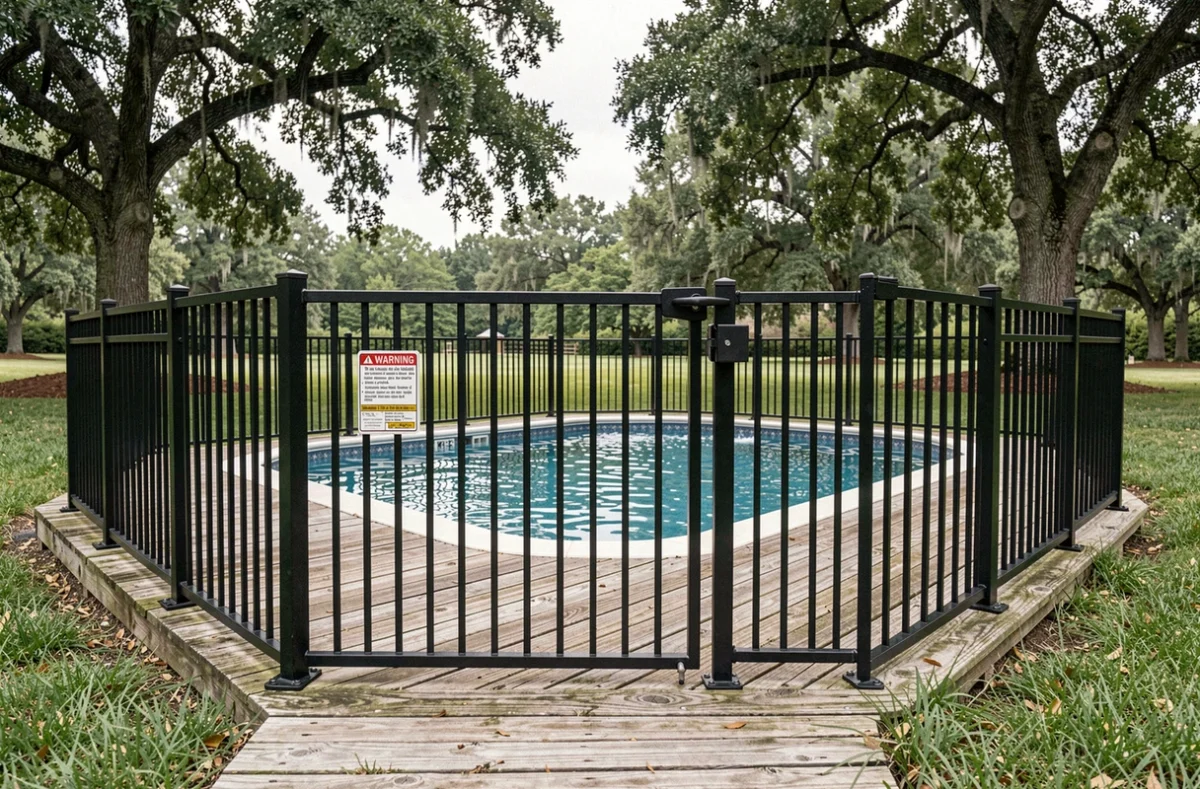
The barrier is, in fact, only one of the four standardized options. The other three, safety cover (NF P90-308), alarm (NF P90-307), and pool shelter (NF P90-309), each meet different usage constraints. The choice depends on the layout of the land, budget, and swimming habits, but only one compliant device is sufficient to satisfy the law.
Before each swimming season, checking the mechanical condition of the barrier, the operation of the gate, and the absence of any elements facilitating climbing remains the most direct precaution to maintain compliance over time.