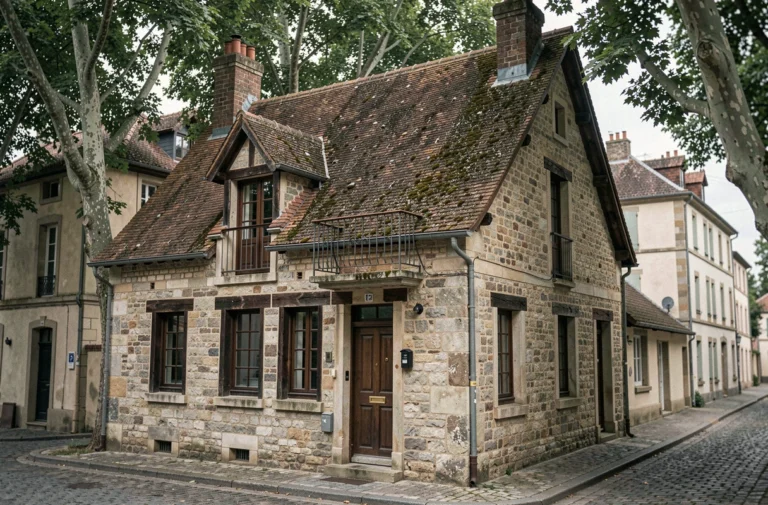
Securing a home project is not just about choosing an alarm or reinforcing a door. The real lever is to adapt each decision to the actual risk of the property, its location, and the legal constraints that most guides overlook. Monhabitoo offers a support framework that covers these dimensions, from the initial audit to the construction follow-up.
Burglary Rates by Department: Discrepancies that Change Priorities
Competing content presents the same list of equipment regardless of the territory. The 2025 data from Insee tells a different story: burglary rates vary significantly from one department to another. For example, Tarn-et-Garonne reaches 7.1 incidents per 1,000 homes, while other departments show much lower levels.
This disparity means that a homeowner in a low-exposure rural area does not need the same system as a resident in a dense urban area. Before investing in equipment, the first step is to assess the actual exposure of the property by consulting local statistics.
For those looking to secure their home with monhabitoo.fr and Belle Déco, this territorial audit logic is part of the proposed framework: adapting recommendations to the geographical context rather than applying a standard grid.
| Indicator | High-Risk Area | Moderate-Risk Area |
|---|---|---|
| Equipment Priority | Connected alarm + video surveillance + access reinforcement | Outdoor lighting + reinforced lock |
| Budget to Consider | Higher, multiple layers of protection | Targeted at entry points |
| Recommended Audit | Professional with on-site diagnosis | Self-assessment possible via public data |
| Legal Constraint for Cameras | Strong (urban density, close neighbors) | Moderate (isolated property) |

Home Video Surveillance: The Legal Constraint That Guides Overlook
Video surveillance is included in almost all security recommendations. What these guides rarely mention is the legal framework that applies to individuals. A homeowner must direct their cameras exclusively towards their own property. Filming public roads or neighboring homes exposes one to sanctions.
This constraint alters the very design of the security project. The coverage angle of a camera, its installation height, its field of vision: everything must be calculated to respect the image rights of third parties. In a housing estate or a semi-detached home, the margins for maneuver are limited.
Concrete Obligations for a Compliant Installation
- Cameras should only cover private space: garden, entrance, garage, facade facing the property. No shots of the street or a neighbor’s property.
- A sign indicating the presence of a video surveillance system is recommended, even on private property, to inform visitors.
- Recordings must be kept for a limited duration and cannot be freely disseminated, under penalty of prosecution.
Monhabitoo incorporates this regulatory aspect into its recommendations, preventing the discovery after installation that the system poses a compliance issue.
Reducing Exposure Rather Than Reacting to a Temporary Increase
Data from the Ministry of the Interior’s Statistical Service indicate a decrease in residential burglaries in 2025 compared to 2024, while maintaining a level above 200,000 incidents for the year. The decline is real, but the volume remains significant.
This trend encourages a different way of thinking. Securing a home project should not be a reaction to a media spike. The goal is to permanently reduce the exposure of the property, regardless of annual fluctuations.
Three Long-Term Exposure Reduction Axes
The first axis concerns entry points. Doors, windows, sliding glass doors: their mechanical resistance determines the time needed for a break-in. The longer this time increases, the higher the risk of abandonment by the intruder.
The second axis focuses on visible deterrence. Outdoor motion-sensor lighting, combined with alarm signage, alters the risk-benefit calculation for a potential burglar.
The third axis, less addressed, concerns the coordination between the various trades involved in a renovation or development project. A locksmith, an electrician for the alarm, a camera installer: without coordination, the systems operate in silos and leave blind spots.
Renovation Project and Security: Integrating Protection from the Design Stage
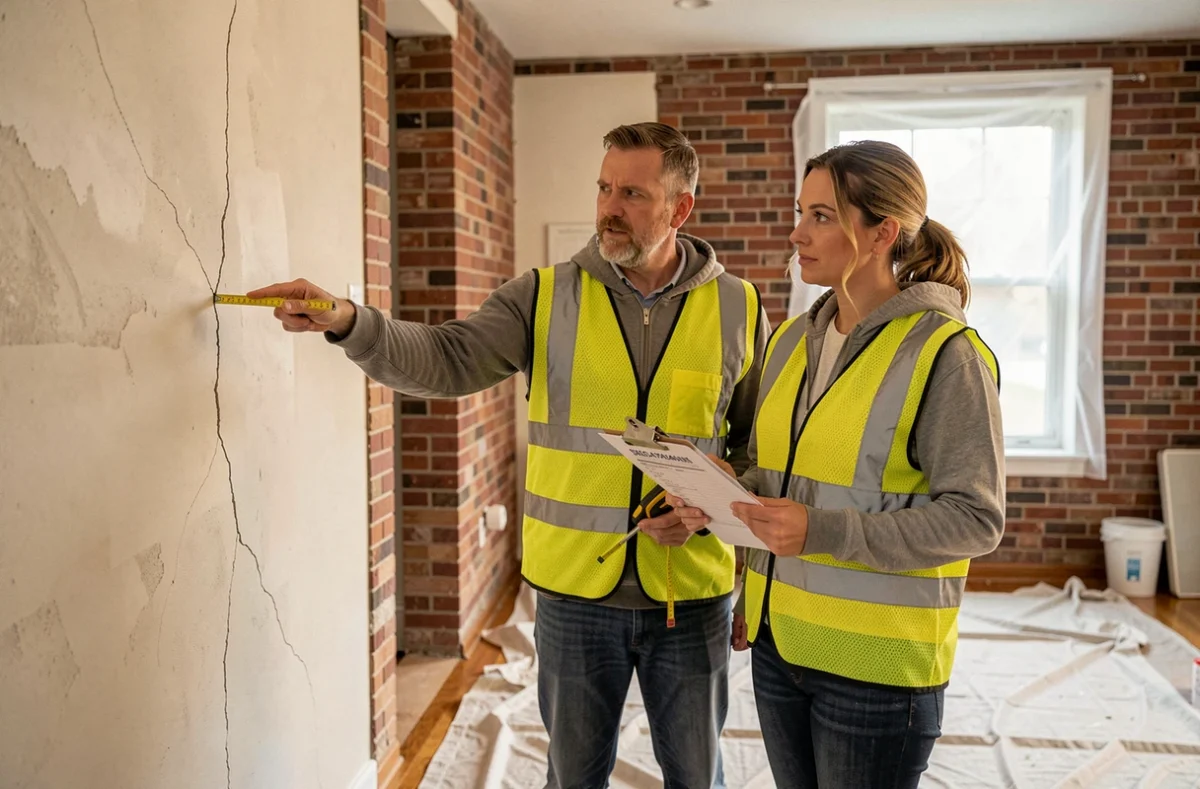
Renovation or interior design projects represent the ideal time to integrate security. Redoing a kitchen, rearranging a living room, or insulating an attic already involves the intervention of professionals. Adding a security aspect at this stage costs significantly less than having to redo the installation later.
Running the wires for a wired alarm during a wall renovation, for example, avoids the need to drill and patch later. Planning the camera locations in advance allows for compliance with legal constraints from the design stage.
On Monhabitoo, this approach translates into connecting with professionals who cover both decoration, layout, and security. The gain is not only financial: a project thought out globally limits rework and oversights.
The volume of burglaries remains high despite the recent decrease, and territorial discrepancies confirm that no generic solution fits all homes. The key data remains this: adapting each system to the measured local risk produces better results than piling up equipment without prior diagnosis.