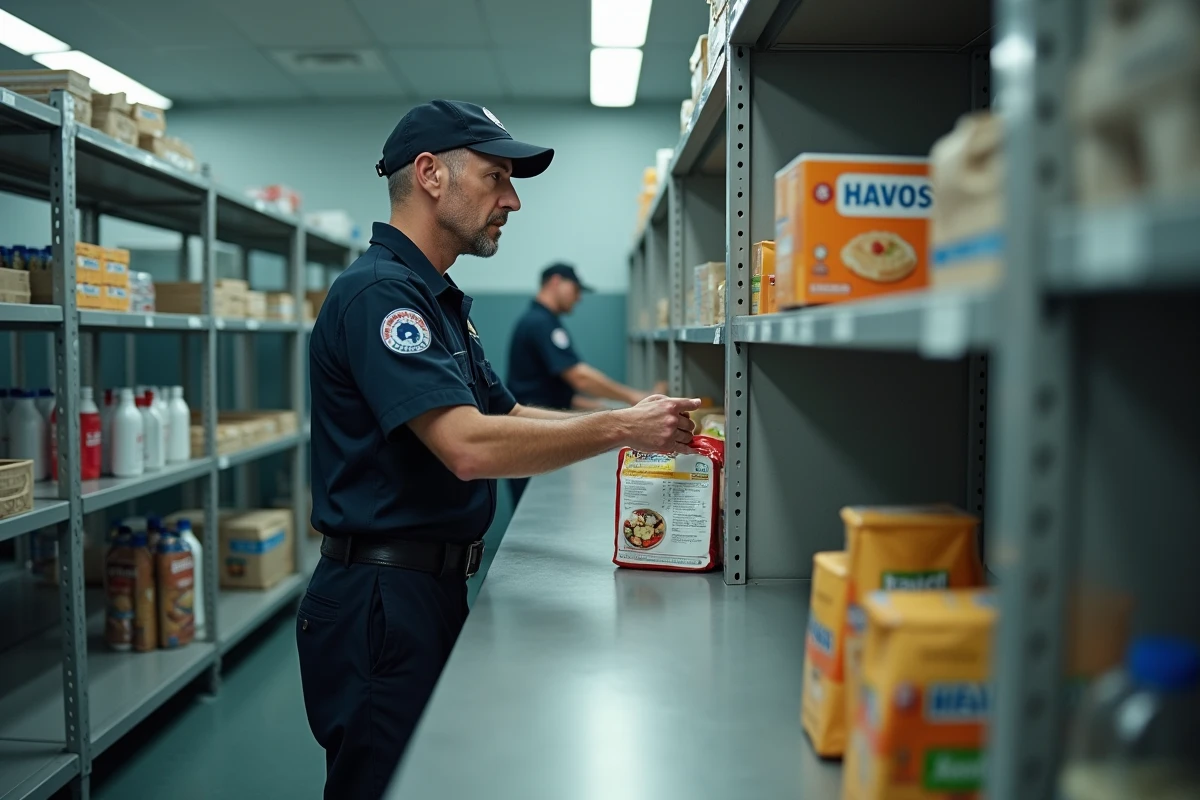
The canteen remains the main lever for access to everyday products for incarcerated individuals in France. With one of the highest overcrowding rates in Europe, the question of pricing and associated rights takes on a new dimension in 2026. This system, governed by the penitentiary code, operates under rules that families and inmates often discover too late.
Pricing of the penitentiary canteen: a regulatory framework that allows discrepancies
The Council of State has validated the principle of differentiated pricing between establishments and between categories of inmates. In practice, two prisons located in the same region can apply different prices for the same product. This pricing flexibility is based on contracts between the prison administration and its suppliers, which vary according to the size of the establishment, its management mode (public or delegated), and the volume of orders.
The International Prison Observatory notes in its surveys that some basic products in the canteen can be priced at up to double that of prices outside. This discrepancy is regularly described as usurious by associations. To follow the evolution of canteen product prices in prison 2026, it is essential to understand that these prices are not set by a single national scale but result from local negotiations.
The report from the Court of Auditors in April 2026 on the commercial account 912 (canteen and inmate work) confirms that canteen expenses are on the rise. The associated revenues are deemed “artificially inflated,” raising questions about the sustainability of the model.

Inmate rights regarding the canteen: what the penitentiary code provides
Every incarcerated person has the right to access the canteen, as stated in the penitentiary code. This right covers supplementary food, hygiene products, tobacco, stationery, and certain appliances (television, fan depending on the establishments). Orders are made via canteen vouchers, usually on a weekly basis.
Purchases are deducted from the inmate’s personal account, funded by three possible sources:
- Money orders sent by relatives, capped according to the establishments and subject to a percentage reserved for the “victims” share and release savings
- Wages from prison work, which remain very low compared to the cost of living in detention
- One-time aid provided by Catholic Relief, the Red Cross, or other authorized associations for inmates without resources
A little-known point: sending food by families remains prohibited in France. This ban, justified by security reasons, distinguishes the French system from what is tolerated in several other Council of Europe countries.
Prison overcrowding and increased dependence on the canteen in 2026
The latest report from the Council of Europe on prisons, published in 2025 and commented on by Euronews in May 2026, places France at 131 inmates for 100 places. This overcrowding concerns not only comfort or crowding but directly alters the relationship with the canteen.
The more overcrowded an establishment is, the more standardized and limited the collective meals served by the administration become. The canteen thus becomes the only means to supplement a diet deemed insufficient by many inmates. Those without resources, who receive neither money orders nor wages, find themselves in a situation of total dependence on meals provided by the establishment.
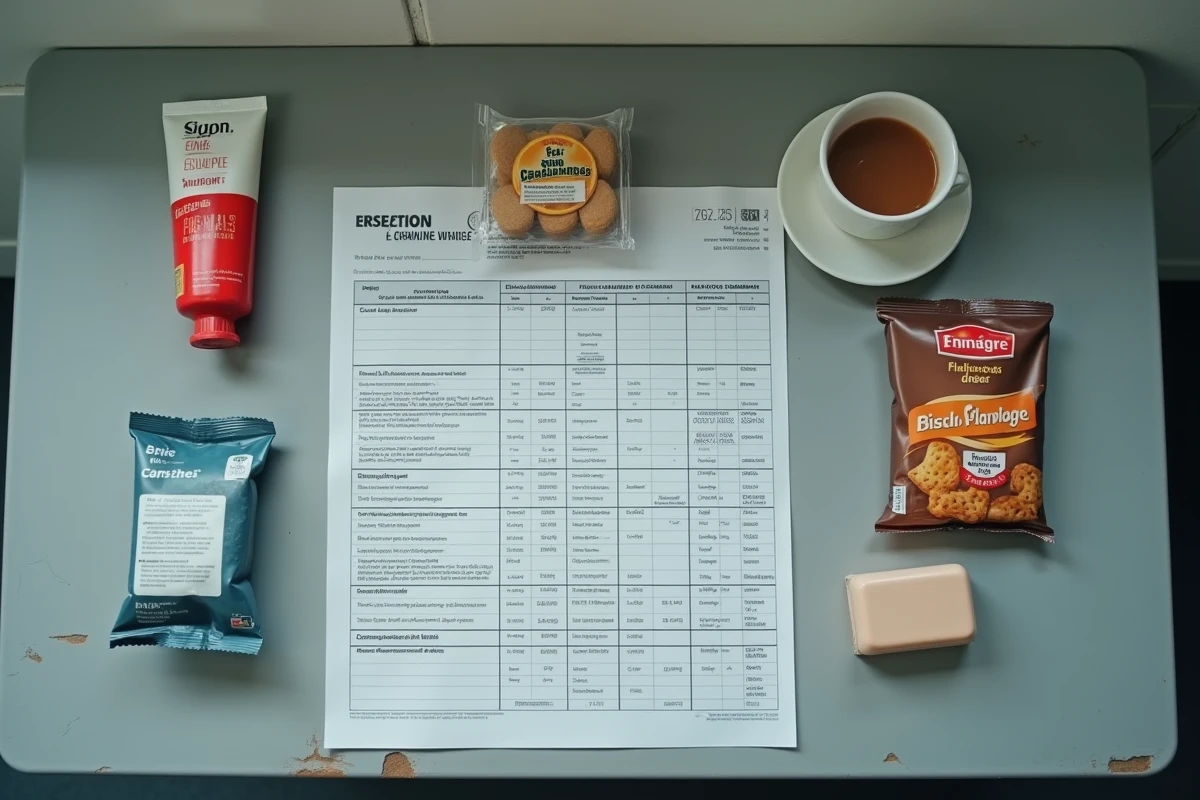
Recent academic work (master’s theses and studies from ENAP between 2024 and 2026) shows that the canteen also functions as an informal tool for social regulation in detention. Access to certain products creates hierarchies among inmates, fuels parallel exchanges, and impacts the detention climate.
Budget management in detention: the real maneuvering margins of inmates
The personal account of each inmate is divided into three parts: the available share (for the canteen), the “victims” share (a percentage deducted for the benefit of civil parties), and the release savings share, which is blocked until release. This mechanism mechanically reduces real purchasing power.
The remuneration for work in prison, when a position is available, is well below the hourly minimum wage. The Court of Auditors’ report notes that the work section of the commercial account 912 remains in deficit. For an inmate working in the workshop, the amount available each month after deductions barely covers basic canteen needs.
Some benchmarks on what inmates must finance themselves through the canteen:
- Hygiene products beyond the minimal kit distributed upon arrival (toothpaste, soap, towels)
- Supplementary food (fruits, canned goods, coffee, sugar)
- Television rental, billed monthly in most establishments
- Stamps, envelopes, and supplies for correspondence
Field reports vary on the extent of difficulties depending on the establishments. In overcrowded remand centers, pressure on the canteen is greater than in detention centers where the population is more stable and material conditions slightly better.
The current framework of the penitentiary canteen in France relies on a fragile balance between security constraints, budgetary logic, and respect for the dignity rights of incarcerated individuals. The rising costs documented by the Court of Auditors, combined with record overcrowding, place this issue at the center of concerns for justice actors in the coming years.